Showing posts with label Musing Over Monsters. Show all posts

In D&D, the Big Bad is the Main Character

 By RJ on 16 April 2023.


This far into the life of Dungeons & Dragons, many people understand the player characters are important to the game. Without them and their antics, the game dies. However, they're not the most important characters. They are not even the main characters. The player characters may be the protagonists, but they are reacting to someone else's plots; they are the antagonists in someone else's story: the big bad.

Shocking, right? I may have just scorched the outlooks of a few people. Give it a ponder, though. It's true.

  1. The big bad is the center of the plot.
  2. The big bad regularly interacts with other characters, both PCs and NPCs.
  3. The big bad is the most important and influential individual in the campaign or adventure.
  4. The big bad's actions provide the impetus for the player characters' reactions.

In most D&D games, the big bad is the main character. They can make or break an entire game. Thus, like every great character, they need serious thought put into them. To explore this, let's analyze one of my most treasured villains...with a twist. This big bad, despite me checking every box, failed.

Meet Lazarus the Glutton.

A D&D Villain: Lazarus the Glutton

My third D&D campaign, called The Enoach Desert, revolved around the recovery of an ancient necromancer's scattered organs. Vaugashir was the deceased spellcaster's name and of course, he was an ultra-powerful red dragon. Each of the big bads in the campaign possessed or was in pursuit of one of these valuable organs which a forward-thinking faction scattered across the desert to ensure his soul could never reform a new body or reunite with his old one. 

A yuan-ti anathema called Sevra Tan sought Vaugashir's heart. The ancient blue dragon Nauthog searched for his claw. Meanwhile, Platyz Aphidious needed the dead necromancer's brain. However, my favorite and by far the best was Lazarus the Glutton.

As his name suggests, Lazarus was a ravenous entity. Trapped in his lair, he was an obese red dragon. After decades of unhindered consumption, he was barely able to move but had dominated a host of minions into scouring the surrounding lands for more and more food. In his lair, he feasted. Days turned into months which turned into years.

Essentially, he was big, he was bad, and he was connected to the characters.

Much of the conflict surrounding the characters stemmed from Lazarus. Their early adventures, their personal plight, and the greater plot centralized around the dragon. While some of this, my input (the early adventures and greater plot) was planned, all the personal problems with the dragon emerged organically.

That's the key: every character needs to have personal connections to the big bad. The main character of the story should have a reason to interact with every character within the said story, especially the other important individuals.

Alongside these connections, Lazarus also had a variety of motivations. This spawned plots of his across the region. He wasn't only looking to eliminate a rival blue dragon. He also sought to scour the entire land of all the food and treasure he could find! He wasn't only keen on preventing the resurrection of his red dragon necromancer of a father, he was in a loose relationship with the Aphid Alliance and needed to siphon some of his own hoard to these thri-kreen criminals.

This long list of motivations ensured if one plot succeeded or was stifled by the party, Lazarus remained a threat and in the story. The only way Lazarus would disappear was if he was dealt with directly...or if the party up and left the region, which is always an option!

Why Did My Villain Fail?

Now that you know Lazarus the Glutton's background, motivations, and relation to the group, you're prepared to witness how he failed as a villain. Here's the funny part: he didn't. Instead, the group did.

This particular big bad never actually met the characters. Although his name was mentioned plenty, the party's plans revolved around his machinations, and they nearly encountered him in the flesh, he failed as a villain because the group fell apart.

Despite the group's desire to eliminate Lazarus and his rampant gluttony, interpersonal conflict and scheduling difficulty broke it. I learned from that experience and gained confidence from that failure. In good time, I'll write a full-on article about it, but for now, it serves as a focal point for the failure of one of my favorite D&D villains: Lazarus the Glutton.

Keep in mind: you might craft a great big bad, but they may never get the chance to shine. That's okay, it allows their plans to play out now and affect your world, or it gives you fodder for a future campaign.

How Will I Rebound With My Next D&D Villain?

Sometimes, our worst nightmares tear apart our greatest dreams. Lazarus the Glutton was my perfect D&D villain but he failed, in the end, due to no fault of his own.

In one of my ongoing campaigns, the Bannerless, the big bad is a human noble named Corin Calgrast. More particularly, his name is Lord Corin Calgrast, Duke of Desmaine. Here is a one-pager about him and his motives.

Even though I missed out on playing Lazarus with the party, I've brought that energy into my next big bad. Lord Corin is ready to confront my latest group. Any prior unfortunate events are learned from and in the past. Now, I look toward the future.

Don't let past mistakes or nasty events affect your current game in any negative manner. Learn from them and push forward.

Lessons Learned

That was a fun one to write. Here's what we learned this week:

  • Villains are the main characters in most D&D campaigns. Their actions affect the world just as much as the player characters. Most of the time, the PCs are reacting to the big bad's vile machinations.
  • Proper villains need a background, multiple motivations, and connections to player characters. This makes them easier to organically play and gives every player a reason to hate or become invested in the story of the villain.
  • If a villain doesn't work out, learn what went wrong and rebound with your next villain. Sometimes, a big bad not working isn't even your fault, it may be out of your hands. Do not like that discourage you.
  • Never linger in the past, learn from it.

Did you enjoy this article? If the answer's yes, check out last week's post all about crafting D&D monsters with the ranger player class.

Related Articles

Want More RPG Tips & Tales from RJD20?

As always, thanks for reading. Please send all inquiries to rjd20writes@gmail.com or leave a comment below.

Ranger D&D Monsters

By R.J. Compton on 9 April 2023.


Rangers are formidable combatants. They make excellent allies in numerous scenarios. As Dungeon Masters, though, we might wonder how they could become foils to our heroic parties or merry vagabond bands. Despite their less-than-welcoming reception in fifth edition Dungeons & Dragons, rangers still provide a host of abilities, narrative strands, and wild ideas to Dungeon Masters for custom D&D monster creation. Look in the current edition of D&D, gaze into the past, and pick what you like. You're bound to find a nice mound of ranger-scented truffles.

Today, that's what we're exploring: how to make a D&D monster with the ranger player class. 

Like any sensible ranger, let's rush right into the fray.

A Simpler Approach

While crafting a set of traits of our own may be fun and thought-provoking, there is a simpler way to attach ranger abilities and ideas to D&D monsters. Let's check out this simplified method before delving deeper.

Gather and peer through the various ranger subclasses in fifth edition D&D, or look at rangers of editions gone by. Pick a feature, steal it, and plop it right on a monster. There you go: you have a ranger-like monster to pit against your party. Here are a few great ranger subclass features to attach to your monsters.

  • The Gloom Stalker's Umbral Sight. The monster gains darkvision out to a range of 60 feet. If they already have darkvision race, its range increases by 30 feet. They are also adept at evading creatures that rely on darkvision. While in darkness, they are invisible to any creature that relies on darkvision to see them in that darkness.
  • The Horizon Walker's Distant Strike. The monster gains the ability to pass between the planes in a blink of an eye. When they use the Attack action, they can teleport up to 10 feet before each attack to an unoccupied space they can see. If they attack at least two different creatures with the action, they can make one additional attack with it against a third creature.
  • The Hunter's Horde Breaker. Once on each of the monster's turns when they make a weapon attack, they can make another attack with the same weapon against a different creature that is within 5 feet of the original target and within range of their weapon.

Identify Ranger Traits

Alright, time to go in-depth.

Before we even start crafting monsters, we need to identify what traits of the ranger class we can swipe and insert into our monsters to further flavor and embolden them. Each of these major traits can be used to build a set of possible abilities or background bits.

What do you think about a goblin defined by the decrepit caverns he wanders? Or a bugbear who specifically hunts other bugbears? Perhaps a fire giant who swaps between multiple weapons in a battle, each crafted in the fiery forges of the obviously best variety of giant?

Let's define the obvious ranger traits.

Wild Spirit 

Generally, rangers are free-ranging and intimately connected to the unbounded straits of land. Forests, plains, mountains, swamps, caverns, and deserts are where they roam best, though a select few might treat urban environments as their wilderness of choice. Rangers typically take on aspects of the region around them in their personality, appearance, and even combat technique. For example, a ranger who lives in a forest might have a firm personality like the trees around them, rely on a strong support system as each member of the forest family relies on each other, and abhor civilization from tearing apart the forest to build mockeries of the ranger's own home.

Imagine a goblin ranger who embodies the mushroom grove he lives in. The goblin wears a mushroom cap hat, carries pouches filled with dangerous spores, lives inside a massive mushroom, and even has an odd dog-shaped mushroom companion. Mix a ranger combat trait or two into that and you have a unique, mushroom-obsessed goblin ranger.

Favored Foes

Since I've played D&D, I've associated rangers with the favored enemy trait. Whether it was third edition, Neverwinter Nights, or the wacky implementation of the concept in fifth edition, I'd always look forward to crafting my own ranger around their favored enemy. You can do the same with a monster. However, if it's going to be battling the characters, do your diligence and ensure its favored foe is in the party. It won't be an interesting enemy trait if it doesn't ever come up in battle.

Imagine pitting a kobold with a pension for hunting halflings against your primarily-halfling group. How about a balor demon with a fierce hatred for elves and is able to sense them miles away? Maybe a hill giant who embraces the fine art of dwarf smashing? The favored foe trait need not only provide combat bonuses to this ranger monster, but it can also provide plenty of storytelling opportunities for you and the rest of the group.

Numerous Fighting Styles

Why stick to one way of fighting when you can style on your foes? A classic function of the ranger is a wide range of weapon combat options. An elven ranger may specialize in dual-wielding longswords and weaving quickly through the bloodshed. A dwarf ranger might practice archery and outshine even the finest human archers. Another could wield only a battleaxe, or a scimitar and shield, or a greatsword of mighty proportions. Plus, each of these rangers could swap between these fighting styles swiftly; one round they might dual-wield, the next they may retreat behind cover and loose a volley of arrows.

Elf by artborne-wd.

This is a great way to make a battle dynamic. A ranger-based monster can focus not on a wide array of abilities, but on a decent arsenal of different weapons to swap between.

Light Nature Magic

Nothing extravagant emerges from the ranger in the form of magic, but any monster inspired by them could have minor connections to nature magic. Easily, you can just drop the exact Ranger spells from any Player's Handbook onto your monster, or slightly retool them if needed. We can do this with a few Ranger spells from the 2014 Player's Handbook, such as thorn whip, entangle, and hail of thorns. It need not be extravagant; it'll provide new options and new flavor to a usual, bland monster.

Make Ranger Trait and Monster Lists

Armed with what makes a ranger and what will translate well to a D&D monster, it's time to make lists or a table of the potential monsters and ranger-inspired abilities and traits. One list needs a bunch of ranger traits. The other should be a batch of monsters you can apply these ranger traits to. Here's an example of two lists with ten items each.

Ranger Traits

  1. Terrain Attunement. The monster is able to hide in, maneuver around, and knows a lot about certain types of environments like forests, plains, caverns, or mountains. This gives them bonuses to Stealth, any knowledge check about the landscape, and inside information on the dangers and secrets in the area.
  2. One With the Land. The monster has become one with its environment. It takes on features unique to its environment. For example, a desert ranger may craft needles into their armor, have sandy yellow skin, or carve weapons from the bone of great waste beasts.
  3. Obsessed and Angry. The monster hunts a certain type of enemy. When battling this enemy, they gain great combat and out-of-combat benefits.
  4. Only Eyes For One. The monster once hunted a certain class of enemy but stopped to focus all their ire on one specific foe. When battling this sole foe, they gain incredible combat benefits. They also know everything there is to know about this individual.
  5. Rabid Weapon Swapper. The monster switches between multiple weapons and fighting styles during combat. Consider allowing it to freely swap between weapons every round, batching an interesting movement ability alongside it. When it swaps to a bow, the monster might leap into a strategic position. When it shucks its offhand sword to the side and pulls out a huge shield, it pushes its allies to the side and becomes the biggest target in the battle.
  6. It Takes Two. The monster uses one powerful weapon during its first hit point pool, then swaps to another during its second hit point pool. This should be an epic moment in the battle that showcases not only the strength of the monster but the awesome weapons it is wielding...that may soon be in the characters' hands.
  7. Healthy Helper. The monster focuses on enhancing its beast companion with nature magic. During battles with it, the true power lies in this monster's companion. However, without the ranger alive, the companion becomes a whimpering shell of its empowered self.
  8. Don't Vine If I Do. The monster wields nature magic to control its enemies. Arm the monster with thorn whip, entangle, hail of thorns, et cetera. If you don't want to look up spells during combat, just use the base monster's basic attack bonus and give it to a summoned thorn vine controlled by the monster.
Crypts of Ravenloft by vilenko.

Ranger Monster Bases

  1. Goblin
  2. Bugbear
  3. Gnoll
  4. Oni / Ogre Mage
  5. Hill Giant
  6. Erinyes
  7. Balor Demon
  8. Ancient Black Dragon

Craft Creatures Using the Ranger Class

Don't run off on your own just yet! Here's a brief list of potential monsters you can use in your D&D games. Each is inspired by the ranger in some way.

  1. Goblin Pathfinder - a goblin who specializes in blazing trails in a specific terrain type.
  2. Bugbear Stalker - a bugbear who melds into her surroundings and springs upon unsuspecting prey with nature magic.
  3. Gnoll Ravager - a gnoll who swaps between multiple weapons during battle, cycling until his foes lay dead before him.
  4. Oni Avenger - an ogre mage who tracks a specific favored foe, eager to take them out after taking extreme precautions to prepare for the battle.
  5. Hill Giant Deadeye - a hill giant who swaps from dual-wielding longsword to a great bow upon the midsection of the fight.
  6. Erinyes Raider - an erinyes imbued with bits and pieces of hell-scarred nature magic.

Lessons Learned

The player character classes of D&D provide Dungeon Masters with plenty of inspiration to build interesting monsters. 

In particular, the ranger class helps create monsters with a variety of interesting properties like nature magic, varied fighting styles, and favored foes. You can mix and match these traits with any base monster across any D&D edition and you'll end up with a more interesting creature, plus a few ideas to build their story around. 

The idea of crossing classes with monsters may seem incredibly basic, but it's powerful. If you need to make a unique monster fast, are tired of typical monster features, and have access to or knowledge of the character classes, this is a great monster-making method. 

Try it out and let me know how it goes!

If you enjoyed this post, check out last week's article, all about how to improve your Dungeon Mastering craft while on a hiatus from running games behind the screen. If you'd like to read more RJD20 articles and improve your tabletop roleplaying game sessions and worlds, check out the links below.

Related Articles

Want More RPG Tips & Tales from RJD20?

As always, thanks for reading. Please send all inquiries to rjd20writes@gmail.com or leave a comment below.

Monster Mash

By Ian on 12 March 2023.


Whether it’s a stick-wielding goblin or a raging pit fiend from the depths of Nessus, the monsters of D&D come in all shapes and sizes. Oftentimes this makes it easy for a DM to find the perfect beasty fit for almost any encounter. However, there are some cases where it’s best to look beyond the Monster Manual. Perhaps you’re DMing for experienced players and are looking to challenge them with an abomination none of them have faced before, or maybe you have been wanting to use a creature that is not found in your campaign’s environment. It’s times like these I enjoy using a DM technique I call the Monster Mash. 

This is done by mixing a base monster with one or more other ingredients in order to create a new creature. The most common ingredients used in this process are:

  • Another monster or animal
  • An element or environment
  • A class or background from the Player's Handbook

To demonstrate the process, let’s craft a creature together using all of the ingredients above. The monster we’ll be mashing today will be the Roper. 

Mixing Monsters 

Combining monsters is not as simple as stitching two beasts together, unless you're looking to create a flesh golem. Instead, this process should involve infusing your base monster with the features or abilities of another. Ultimately, this will leave your monster with a slew of new abilities at its disposal, but be sure to have creative lore ready to describe how this abomination came to be.

  • The beholder artificer had long since discarded his fleshy form. Now inhabiting a mechanical body, it seeks to rid the material plane of organic life.
  • A centaur cursed by a yuan-ti blood ritual still has the lower body of a stallion, but now has the upper body of a humanoid cobra. A new breed of warrior for the Serpentine Cabal.
  • Seeking to eliminate its weakness to sunlight, a vampire lord regularly ingests large amounts of troll blood. Though his experiment was a success, it left him with weaknesses of a different kind.

Let's take a look at our Roper. Even though it's able to make five attacks on its turn (four tendrils, one bite), only its bite attack actually deals damage. This means our poor Roper can easily be overwhelmed by a party's action economy. Instead, let’s splice our Roper’s tendrils with a terrifying creature from the real world: the sea lamprey.

Fusing a lamprey head to the end of our Roper’s tendrils gives it circular mouths filled with barbed teeth that latch onto prey. The tendrils can still reel targets in for the Roper’s larger bite attack, while also dealing a little damage of their own. This small change greatly increases the difficulty and tension of an encounter without the need of adding additional creatures.

Environmental Adaptation

Certain monsters are limited to specific environments or planes of existence. This can be quite the hurdle when you want to implement them into an encounter, but don’t let it stop you. Instead adapt your creature based on its new environment, changing its abilities to fit its new habitat. The creature may have learned to use this terrain to its advantage, allowing it to evolve abilities beyond those of its more ordinary kin.

  • Pratorian the Sightless hatched, grew, and thrived in the depths of the Underdark. Though the black dragon was blind from an early age, he learned to hunt using his senses of smell and hearing, granting him both blindsense and keen smell. All it cost him was his eyes.
  • The sahuagin of the Copper Sands grew to live on minimal water, instead burrowing to survive on the moisture found deep under the shifting dunes. Often coming up to hunt during the cold nights. They evolved and gained burrowing speed plus tremor sense. 
  • A treant growing in the Underhallow becomes overgrown by fungi and an unlikely symbiotic relationship begins. The fungal infection allows the treant to throw spore clusters that create poisonous clouds. Also, instead of awakening trees, the fungal treant is able to summon myconids.

Moving back to our Roper, we find it in a frozen fortress long abandoned by its draconic residents. With not a single stalagmite in sight how can the poor Roper hope to hide? Adaptation is needed if this Roper is to survive. Instead of relying on stalagmites, let’s say our Roper has adapted to hide among a series of large icicles. Now, our Roper has evolved to deal cold damage and its clear icy skin causes ray spells to reflect randomly. Suddenly, this Roper is feeling far more dangerous.       

Classy Critters

As player characters earn levels, they also gain access to a plethora of powerful traits and abilities. This progression demonstrates a character's mastery of their honed craft, whether it be martial, magical, or something in between. Yet if player characters are able to learn these skills, why can’t their enemies? Giving your monster abilities from within the Player's Handbook is fair game, so long as you have an explanation handy!

  • No one expected the fearsome lich would also turn out to be a professional lute player. Perhaps there’s more to this undead bard than the tales suggest.
  • An unarmed thri-kreen may seem like an easy target. That is until you discover it has been trained in the Way of Four Fists by a monk.
  • An insane kuo-toa wielding paladin-like abilities may convince some to worship his slimy idol, but who knows where his powers truly come from?

For the final time, let's return to our ferocious Roper. It may not have the intelligence of a wizard or the agility of a rogue, but what it does have is fury. Giving our Roper access to the barbarian’s signature rage ability will make this fight truly unique for the coming party. 

After going weeks without a proper meal, the icy Roper senses the presence of four individuals exploring its frozen lair. What the party thinks is merely dripping water is in fact the creature’s many lamprey-like mouths beginning to salivate. Too late, the party realizes the danger as the Roper enters a hunger-fueled rage. Immediately, half the group is bitten and pulled toward the Roper’s freezing jaws. 

Another memorable encounter thanks to the Monster Mash.  

In Conclusion        

Creating a Monster Mash is an effective way to challenge or surprise your players. This technique works best when DMing for experienced parties, or when a desired monster doesn't quite fit the campaign’s environment. Simply mixing an existing monster with a few ingredients can create an unforgettable encounter. 

If you have ever crafted a custom monster of your own please tell me about it in the comments below!   

Related Articles

Want More RPG Tips & Tales from RJD20?

As always, thanks for reading. Please send all inquiries to rjd20writes@gmail.com or leave a comment below.

Unveil the Power of Thief-Like Creatures in D&D Campaigns

By RJ on 12 February 2023.


No one expects a rogue as a monster, do they? Well, if you play your cards right, they shouldn't! Do note: I'm not speaking for all the conniving bandit lords Dungeons & Dragons groups battle, the goblins who are quite thieving, or the hill giants who pillage every pantry in sight. I mean legitimate monsters who use actions inspired by the archetypal rogue class present in nearly every fantasy roleplaying game imaginable.

In this article, we are crafting a formidable foe inspired by rogues and providing plenty of inspiration for more monsters in the same vein.

Let me loop you in on other potential rogue-based foes before we hop into my fully fleshed-out creature:

  1. The Crawling Claw Arcane Trickster. This tiny undead hand can control another spectral hand that specializes in picking locks, confusing targets, and even performing silent assassinations.
  2. The Balor Demon Swashbuckler. This lord of abyssal pits has mastered one-on-one combat, sparring with archfiends and other balor demons. Moreso than others of its kind, it can maneuver across the battlefield with relative ease and confuse foes with its rapid movements.
  3. The Kobold Genius. This small, reptilian humanoid calculates its opponent's moves seconds, if not minutes before they play out. It forms plans within plans and ensures they're all outlined both in mind and on parchment.
  4. The Bugbear Assassin. This vile goblinoid understands the best way to execute a variety of targets wielding a variety of weapons, venoms, and poisons.
  5. The Bandit Lord Trickster. This human rose through the ranks of a greedy bandit clan through sheer intelligence and manipulation. He doesn't only work charismatic magic among his own criminal folk, though. He often attends royal gatherings and balls to trick haughty nobles into accidentally contributing to his powerful bandit clan.
  6. The Rhinoceros Soul Knife. This huge beast was enchanted by an ancient, deceased wizard whose menagerie was loosed upon the world upon his death. The rhino can slice through reality with its charge and force tiny, psychic horns upon its foes.
  7. The Skeleton Thief. This sentient undead was raised by a necromancer and trained to break into wizard towers protected from the living with wards. The skeleton, that of a halfling, sneaks and steals as well as any other living thief.
  8. The Ogre Mastermind. This hulking ogre is not like its kin, rather, the ogre understands how to coerce those around into completing desirable tasks and working with those outside its usual circle. Most of its webbed plans are scrawled across the walls of its cavern home.

I promise you each feels distinct, and each is system agnostic.

Now, let's leap into this article's foe, a particularly dexterous giant.

The Hill Giant Acrobat

Usually, hill giants are viewed as slow-moving, even stumbling hulks. Not the hill giant acrobat, a variant of hill giant who seeks to subvert expectations.

What is a Hill Giant Acrobat?

Acrobats are not born with the innate ability to leap from precarious perch to perch, flip seven times in the air with a single jump, and twist themselves through the most contorted obstacles. They must train relentlessly to hone their physical craft, consume only the best food to sculpt their bodies, and ensure their body and mind work as one, well-oiled machine. 

Hill giant acrobats follow all these procedures and protocols, but only with someone of extreme intellect at their helm. Naturally unintelligent beings, they must be constantly taught and reminded of the huge reserve of strength inside them. This strength meshed with speed and a moderate intellect leads to a near-unstoppable force. Many acrobats use quarterstaves as their weapon of choice. Hill giant acrobats, though, pick out a suitable tree and carve it into a staff for combat. Some of the most legendary imbue their staves with Giantish runes, empowering them with the might of their kind's arcane history.

In Eldar, hill giant acrobats descend from the Order of the Big Stick, an organization of expertly-trained hill giants from the long-dead giant empire of Nargond. Most members of this order are not only acrobats, but they've mastered the Way of the Four Elements. They combine their mastery of acrobatics and elemental strength to channel swift, magical strikes into their tree-sized staves.

In Golgifell, hill giants are all that remain of giantkind in any formidable number and even they are rare. No hill giant acrobat has emerged from the hills & mountains west of the Farloth Peninsula...yet. If one of these odd hill giants were to exist, it would likely be in the Towerpeaks or the lowlands leading into the Gulonde Desert.

A hill giant and his tree by garmonbozia94.

Sample Hill Giant Acrobat

Here's an example hill giant acrobat!

Base Monster: Hill Giant, Monster Manual page 155.

Added Ability: Master of Movement. The foe treats vertical surfaces as if they are regular terrain. On horizontal surfaces while standing upright, the foe gains 20 feet of additional movement. In addition, if they fail a Dexterity saving throw, they may reroll it twice per long rest.

Added Action: Shocking Blow. The foe makes a special attack roll against a target within melee range. If the attack hits, the target must make a Constitution saving throw (8 + Proficiency + the foe's Strength modifier). On a failure, the target becomes Paralyzed until the end of the foe's next turn. In addition, the target takes an additional 6d6 damage based on the foe's weapon. If the foe uses a bludgeoning weapon to make this attack, the attack roll has advantage.

Plot Hook: The hill giant acrobat was sent to eliminate the owner of an ancient relic, then return the relic to its red dragon patron. However, the ancient relic's properties were unknown and during the hill giant acrobat's struggle with the relic's owner, they used the item against the giant. Now, this hill giant acrobat is under the psychic-control of a wealthy dwarven mogul who has realized what an asset it is. The red dragon knows this too and seeks the return of his treasured servant. The player characters might run into the hill giant acrobat on the street as it escorts the dwarven mogul, be hired by the red dragon to free the giant from its trance, or requested to take out the giant by a rival mogul.

Regardless of where and when you decide to drop the hill giant acrobat into your D&D campaign, it's sure to leave a giant-sized crater.

In Summary

As with all other classic character archetypes, typical rogues make excellent bases for ravenous foes and NPCs in your D&D 5E or other RPG campaign. Remember:

  • Character classes can inspire foes on the Dungeon Master's side of the screen or table. Use them as a starting point for your next villain.
  • Rogues make excellent, intelligent antagonists with a knack for powerful, pointed assaults.
  • Even the oddest of creatures can inherit the coolest of abilities from the rogue archetype. Sometimes, these strange ideas become the most compelling and memorable!

The last RJD20 article explored what microtransactions might look like in One D&D. If you'd like a grim but very likely glimpse into the future of this particular brand of RPG, give it a read!

Related Articles

Want More RPG Tips & Tales from RJD20?

As always, thanks for reading. Please send all inquiries to rjd20writes@gmail.com or leave a comment below.

Wrathful Wizard Monsters

By RJ on 19 December 2022. 


The wrath of a vengeful wizard is rarely matched. However, when mated with the ferocity of a monster and the skill of a thoughtful Dungeon Master, a monster imbued with the abilities of the wizard class may not only challenge a player character wizard, but an entire party.

Already on RJD20, we've explored mixing monsters with classes like the bard and barbarian, druid and paladin, and now: we move onward to D&D's most esteemed class: the wizard.

Today, we're looking at three wildly wacky wizard monsters for your next D&D session:

  • A pixie arcanist with a wit as quick as her spellcasting!
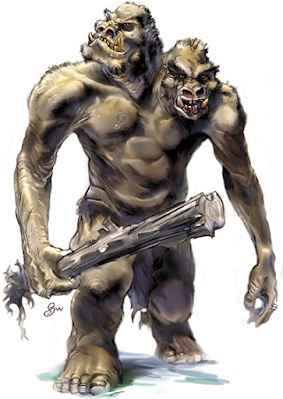
  • An ettin incredible armed with a barrage of magical abilities and an eerily threatening intellect!
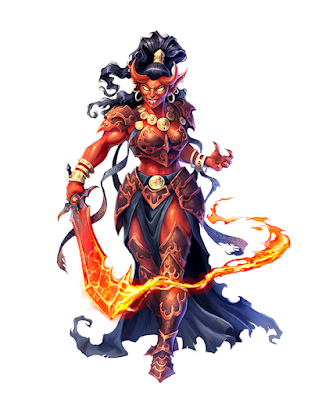
  • An efreeti pyromancer who wields the devastating elemental forces of his blistering home realm!

Each promises a unique experience for your game and your world. How can you pit a pixie arcanist against your party of three murderhobos? Where does an ettin incredible fit in your grand world of sword and sorcery? Does an efreeti pyromancer wield much power in your setting's version of the City of Brass, or is she a jester compared to the warrior-class of the legendary planar settlement?

Before we leap into these monstrous wizards, let this list of eight wizard-based foes inspire you:

  1. An awakened wild boar with a wizard's spellbook stitched to him. Somehow, he's learned how to cast a few cantrips and basic spells.
  2. A deep gnome School of Illusion wizard destined to branch out into the World Above.
  3. A bugbear School of Evocation wizard, also known as an evocationist, who ripped a spellbook from a fallen foe's warm, dead hands and became a master of explosions. She specializes in fireballs.
  4. A wise hill giant School of War wizard specially trained by a resident fire giant sage in the ways of arcane and greater warfare. He has led his tribe to many battles over far superior foes.
  5. An orthon commander specialized in the School of Conjuration, capable of summoning great armies from planes other than his scarred home realm.
  6. An iron giant trained in the School of Enhancement by his archmage creator.
  7. A balor keen in the dark magic of the School of Necromancy, heading a horde of demons and abhorrent undead.
  8. An ancient green dragon wise in the School of Lore, knowledgeable in every single aspect of the world known to mortals...and even some information kept only by those of immortal bend.
Wizard Foe Generator

For this particular strand of foes crossed with one of D&D's most iconic classes, I've crafted the Wizard Foe Generator. Try it out! It provides you with a base monster, where they can be found, and an ability/action inspired by the wizard class from D&D 5E and other editions in the game's history.

Now, let's create three wizardly foes.

Pixie Arcanist

Inherently tricky, tiny creatures, twisting a pixie with the abilities of a wizard makes quite the intimidating enemy...or powerful ally. A pixie arcanist wraps her opponents in sparkling strands of magic, rendering them helpless so her swarms of mystical friends can eliminate them in a swift and safe manner.

They're tricky foes to face

What is a Pixie Arcanist?

The wondrous woodlands of the Feywild glitter with the magic of a thousand peculiar peoples. Hags cackle away in their cursed huts and bone-filled caves. Satyr dance along forest trails singing songs of enchantment. Centaurs roam groves illuminated by the bright Feywild twilight, their hooves stomping along to primal beats that ooze magic. Even the forests themselves bubble with arcane potential: trees talk, leaves whisper, and the animals linger with even the sentience of a normal mortal man.

The stars of the Feywild, though, hold a special kind of magic. And when they fall: only a select few are capable of drawing forth that latent energy.

Feywild stars and their crash sites are dotted with powerful glyphs and words of arcane power, mysteriously written in the most elegant form of the Sylvan language. Pixies, fast-moving and inquisitive, are often the first to arrive to these craters. They scribble down the words and phrases on leaf booklets and scratch them out of the rock and ground. Afterward, they spend months and sometimes years practicing these sky-given groupings of words. Only those who remain dedicated to this practice become pixie arcanists.

The otherworldly spells available to pixie arcanists are from distant stars and often involve glittering, awe-inspiring sights of stardust and bewilderment. 

Some spells channel the energy of a burning star. 

Others freeze foes with the infinite chill of space. 

All are coveted by wizards of the Material Plane...

In Eldar, pixie arcanists quickly find their way from the Feywild into other planes of existence. Some believe the stars of other realms like the Hells or even some layers of the Abyss hide even darker "star carvings." In the Material Plane's largest settlement, Galen the City of Magic, a pixie arcanist teaches a special course on this small but unique sphere of arcana.

In Golgifell, fey crossings to Brisantha are some of the most common "magical" occurrences found and witnessed by normal mortals. Fey usually don't wander into the mortal world if they can help it, but some pixies have been known to guard these fey crossings, ordered to by their commanding Fey Court. Pixie arcanists in particular deeply enjoy gazing at the idyllic starscape of Golgifell, and wonder if "star carvings" exist in this world as they do in their own.

Sample Pixie Arcanist

Here's an example pixie arcanist using the Wizard Foe Generator to attach a new ability and action to the base pixie monster.

Base Monster: Pixie, Monster Manual page 253

Added AbilityFalse Self. The pixie arcanist can cast disguise self at will, but it can also shift between Tiny, Small, Medium, and Large creatures. Huge creatures can only shift to Large size.

Added ActionStudent of Cantrip Excellence. The pixie arcanist can cast up to three cantrips with a single action. Each cantrip can be different or the same.

Plot Hook: Pickpocketing becomes the norm of a bustling port city when a pixie arcanist uses her starry arcana to enhance the skills of a local guild of thieves. Their weird magic perplexes the law enforcement, so they bring in those more versed in the arcane arts.

Flavor both outlined abilities as starry-themed: the creatures the pixie arcanist pretends to become have star tattoos on their body. The cantrips manifest in a burst of stardust.

Ettin Incredible

Ready to surprise your players and subvert their characters' expectations? This is the foe for you. An ettin incredible might turn a predictable, blow-for-blow blow-up with a typical ettin into a fight for survival against a creature that should never be able to handle magical abilities in a regular D&D setting. 

No one expects an ettin wizard.

What is an Ettin Incredible?

Only rarely do giantish gods allow one of their misshapen children the mental prowess to pursue a life of magic. Normal ettins are already weird folk among giant kind, pushed to the edges of society. Most times, they aren't even accepted among giants. They are forced to commandeer goblin tribes, serve the whims of orcs and hobgoblins, or become vicious rivals in troll territory. However, in the rarest of circumstances, an ettin is born with an incredible intellect. These ettins are rapidly sought after by giants at the top of the chain (called the Ordning in many worlds) and trained in the ways of arcane magic.

These very rare ettins are known as ettin incredibles.

Unlike almost any other creature, they are able to cast not one, but two spells concurrently. From one mouth and mind, an ettin incredible might spew forth words of power to conjur a fireball while the other crackles out a lightning bolt. Even more impressive, they can concentrate on two different spells at once: one mind might keep a blur around itself, while the other ensures an attacking barbarian stays affected by hold person as the ettin's fire giant allies eviscerate her.

Some ettin incredibles manage to escape servitude once they learn how to wield magic. These ettin incredibles, even solo, are formidable foes.

In Eldar, ettin incredibles originated in Nargond during Giantfall. Not products of giantish gods, these ettin incredibles manifested the wild magic latent in the air of the world during this tumultuous time. As the empire of giants fell and sent tsunamis roaring across the planet, ettin incredibles further ensured giant kind's doom. They leapt into the world and tore scattered factions apart, obliterating them with intense arcane surges and forgotten spells. As quickly as they appeared, they fragmented and wandered across the broken landmasses. Some bloodlines still exist, ettins capable of immense thought and insight, but the most common way of finding them is pure chance. If they are born into the world, they often become leaders of hill giant tribes or respected sages of frost giant jarls and fire giant citadels.

In Golgifell, ettin incredibles are the norm: regular ettins do not exist. Even though ettin incredibles take on the regular "ettin" role, they are still extremely rare alongside all other giants except hill giants. Encountering an ettin in Golgifell is an event best left unattended. The lack of magic in the rest of the world almost seems to redouble itself in ettins, overwhelming any who interact with them. In the most remote wilderlands like Res Mana, ettins boast huge armies and followers who worship them as gods-on-earth.

Sample Ettin Incredible

Below is one example of an ettin incredible created with the Wizard Foe Generator. Beware: it's powerful.

Base Monster: Ettin, Monster Manual page 132

Added AbilityPerfect Mind. The ettin incredible is able to concentrate on two spells simultaneously.

Added ActionImpossible Arcana. The ettin incredible is able to cast two spells in a single turn with a single action.

Plot Hook: Doom befalls a frontier town when a duo of ettin incredibles dominate both a tribe of orcs and a pack of gnolls. At the helm with extreme intelligence and a horde of formidable minions, the ettin incredibles intend on conquering the town and moving closer to "true" civilization.

Efreeti Pyromancer

No enemy fought by your party before has wielded fire magic quite like an efreeti pyromancer. Area domination, explosive damage, and a temper enraged by the might a thousand fires are all staples of this wizard-like wonder from the Elemental Plane of Fire. 

Did I mention she rides in a sleigh pulled by hippos made of magma?

What is an Efreeti Pyromancer?

The typical tyrannical lives of an efreeti noble bore the wisest among their kind. Those who seek unrivaled power delve into the depths of the Plane of Fire, learning the secrets of primeval pyromancy. They become masters of the most scorching element, wielders of the sacred fire, one of the vital elements of creation.

Once they master the secrets of the sacred fire, they become creators as well. A power thought only known to the gods in the hands of a mere creature. Efreeti pyromancers can breathe fiery essence into normal beasts. They can turn snakes into blazing serpents; giant eagles into phoenix-like birds; massive hippos into beasts of molten magma.

From remote studies, they perfect this craft and plot domination of the Plane of Fire and realms beyond. However, an efreeti pyromancer in a world not its own, such as the Material Plane, can easily wreak havoc. 

Entities of pure flame are not meant to exist in worlds of balance.

In Eldar, efreeti pyromancers began as solitary scholars but eventually formed the Cabal of Eternal Flame. As a unit, they've built a dominion across most the Plane of Fire that rivals the strength of the City of Brass. Some suspect they were behind the Devastation in the Material Plane, wherein a huge swath of Aelonis was elementally destroyed. All know they pay homage to Imix, the Prince of Elemental Fire, though some believe he is not their master: some think they control the archomental.

In Golgifell, there's but one tale of an efreeti who took over the Gulonde. In his reign, he turned the sands black and the rivers to lava. The rivers faded, but the black sand remained and cursed the endless desert forevermore. At times, his bellowing laughter can be heard on the wind during great storms of sand. These storms spawn beasts of pure flame, echoes of the pyromancer's initial scarring of the desert.

Example Efreeti Pyromancer

Here is an example of an efreeti pyromancer built with the Wizard Foe Generator.

Base Monster: Efreeti, Monster Manual page 145

Added AbilitySculpt Magic. Spells that would otherwise damage the efreeti pyromancer's allies no longer do so.

Added ActionPlane Bringer. Once per day, the efreeti pyromancer can summon a creature from another plane of existence that is CR 2 or less. The summoned creature returns to its home plane when a new creature is summoned.

Plot Hook: An efreeti pyromancer enters a jungle realm, transforming it into a woodland of fiery beasts and molten magma rivers. Her spree of terror must end, else it'll spread into the nearby countryside.

In Summary

If you're stuck preparing your latest D&D NPC or encounter and really need some magical inspiration, the wizard class serves as an excellent source. Always remember:

  • The Wizard Foe Generator is a rapid-fire way to form a compelling foe for your characters to face.
  • Schools of wizardry work wonderfully as background information, foe motivations, and even plot devices in your world.
  • Enemies based on wizards don't need to use spells, just re-flavor them as innate abilities and actions.

In last week's article, I explored why the spotlight should be shared amongst all at the table, and how it's not only the job of the Dungeon Master to ensure this. If you enjoyed this post, check out last week's post as well!

Here's to greatening your game and world: cheers!

Related Articles

Want More RPG Tips & Tales from RJD20?

As always, thanks for reading. Please send all inquiries to rjd20writes@gmail.com or leave a comment below.

Pernicious Paladin Monsters for Your Next Session

by RJ on 5 December 2022. 


Historically in our beloved tabletop roleplaying game hobby, paladins are the good folk. They protect the innocent. They divide loot fairly. They save the day for the righteous faction. Sometimes they even go too far, especially if their player is inexperienced, and play their "usual" alignment of lawful good as lawful stupid. 

We can love it, hate it, be cynical about it, or we as Dungeon Masters can retool paladins for our own sinister plots and schemes.

The class that many believe to be the do-no-wrong and just? It's time to use it to churn out some monsters for your next D&D session. Fellow DMs all around, I introduce to you: pernicious paladin monsters for your next session:

  • A gnoll avenger
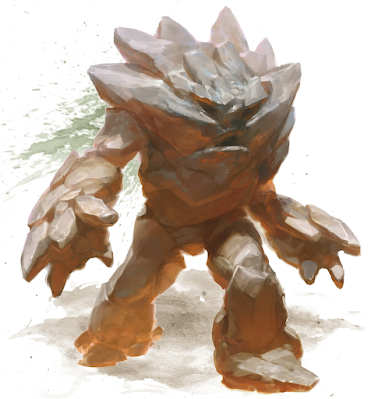
  • An obsidian earth elemental
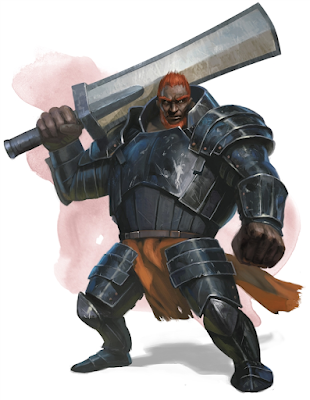
  • A fire giant templar

We've done this before with other D&D 5E Player's Handbook classes like the bard, druid, and even fighter. Now, you'll be able to pepper paladin-based foes throughout your D&D adventures and campaigns. Before we dive into some fleshed out monsters, new abilities, lore and all else, let this list of six monstrous paladins ready your mind:

  1. A goblin who took the Oath of Redemption after stealing, eating one too many sheep.
  2. A kobold under the sway of the Oath of Vengeance thanks to the annihilation of her clan at the hands of a witty white dragon.
  3. An ogre magi/oni sworn to the Oath of the Ancients on the path to becoming a conduit for a primordial force.
  4. A fire giant in service to the Oath of Conquest on a crusade through the Upper Underdark, forcing drow, duergar, and darker beings under his banner.
  5. A rakshasa who follows an Oath of Devotion after being smitten by an angel of the Lower Heavens.
  6. An ancient gold dragon Oathbreaker who broke his powerful Oath of the Ancients to the Platinum Dragon to save a very dear loved one and continued a descent into absolute darkness.

Paladin Foe Generator

For this sampling of foes crossed with one of the classic D&D classes, I've crafted the Paladin Foe Generator. Try it out! It provides you with a base monster, where they can be found, and an ability/action inspired by the paladin class from D&D 5E and other editions gone by.

Now, let's look at some paladin-inspired foes.

Gnoll Avenger

Let's begin with a low-level monster boosted up with my second favorite paladin subclass: the Oath of Vengeance. I present to you, a gnoll avenger.

The story comes first, the "stats" arrive after.

What is a Gnoll Avenger?

Most gnolls serve in the name of Yeenoghu. They pillage, slaughter, and destroy without discrimination. In their eyes, everything is food for gnollkind and their demonic daddy, Yeenoghu. However, what if some gnolls rose above that basic level of intelligence? What if their bestial desires took the form of something concrete, something that could bind a gnoll to a set of principles they could use to enact power over other members of their society?

These calculating leaders of gnoll society are known as gnoll avengers. First established by elders in a time long passed, gnoll avengers lead roaming gnoll packs while abiding by an Oath of Vengeance brutally cut for their demonic species. Its tenets are as follows:

  • Fight the Greater Foe. More formidable folk once destroyed my species' chance on this world. They'll pay for what they've done, as will all who attempt to snuff our raging torch.
  • No Mercy for the Weak. No enemy, strong or weak, faltering or rampaging, is spared by my weapon.
  • Single-Minded Pack. I will not fail in my ultimate duty, no matter the cost to me or my pack.

In Eldar, these gnolls appeared in direct opposition to the Hungerless, a sect of pacifistic gnolls unburdened with Yeenoghu's constant growls. Gnoll avengers blame the Hungerless for their species' complete drop from the world stage, believing they'd rule multiple realms, if not the entire continent of Aelonis if the Hungerless had stayed by Yeenogu's side. Of course this is preposterous, but many packs led by gnoll avengers think it's true.

In Golgifell, gnoll avengers are extremely rare. They are rarely found outside the Gulonde, though one has made a spree all the way into the Odgrir Northlands, at war with the minotaur warlock clans there. In the Gulonde, they uphold a slightly revised version of the tenets above inspired by the unmatched hunger of their patron deity, The Devourer.

Sample Gnoll Avenger

Using the generator provided at the beginning of this article, I rolled up this gnoll avenger's abilities/actions:

  • Base Monster: Gnoll
  • Added AbilityAura of Arcane Defense. The foe naturally emanates an aura in a 10’ radius that grants resistance to all allies against spell damage.
  • Added ActionTouch of Divinity. The foe may use an action to touch one creature (including itself) and end all negative and/or positive effects on it.
  • Plot Hook: Roads into the vast desert are no longer safe. Bandits harry any patrols or guards who try to extinguish them. Every trade caravan trying to pass through is raided and almost nothing is left behind, save a few lives. Recent bandit viciousness comes from a gnoll avenger who has become a bandit lord of sorts. She wields the gnoll-specific Oath of Vengeance against the traders, justifying bandit cruelty against the rich, food and supply rich caravans. Will trade ever return to the region?

Go ahead and drop her into your next session. Let me know if she survives or if she falls in battle as she likely should!

Obsidian Earth Elemental

Next up is a rock-based enemy full of flair: an obsidian earth elemental. This creature is inspired more by the paladin's defensive abilities. Utilizing them, the usually stale earth elemental becomes something dark, exciting, and powerful when paired with a bruiser.

Let's roll right into the lore.

What is an Obsidian Earth Elemental?

The Elemental Planes bury many secrets. Oftentimes, only those who reach these fantastical realms of impossibility discover them, usually by chance. Invasions from these realms, however, sometimes force the hidden pieces into the eyes of the mortal world. One such invasion occurred in the distant past of many different worlds at the hands of the hardy folk known as goliaths.

They were not of the mortal world, instead they hailed from the Elemental Plane of Earth. They were masters of that place, but darker powers forced them to find a new home. The mortal world, or the Material Plane, would suffice, they thought. 

At the head of their invasion were their greatest creations: elemental begins molded not from normal earth or stone, but of crystals and wondrous ores. One of the rarest, earth elementals built entirely from obsidian, were piloted by goliath warlords. These large elementals were not only hardier than normal earth elementals, but also imbued with a touch of shadow. In the blink of an eye, they could vanish from sight, only to appear many feet away, prepared to crush their target. They could also rapidly come to the aid of goliaths, using tough shields and quick movement to absorb hits that would be taken by their creators.

Unfortunately, few survived this successful goliath invasion. The select survivors buried themselves beneath the earth, found a home in shadowy realms, or became treasures of the greediest wyrms of the world.

In Eldar, obsidian earth elementals roam the charred country of Imixia. These elementals are prized possessions of spellcasters there if they can be captured, as they are able to delve into the deep lava pools scattered across the terrain. In almost silent sects in Ogremocha, Imixia's neighboring realm, some goliaths rediscovered the art of forming these obsidian elementals. Their creations do not rival those of ancient earth molders, though.

In Golgifell, a single obsidian earth elemental from the World Below demolished the most bustling town in the Odgrir Northlands about 30 years ago. It still roams the ruins and spews forth steaming lava from its roaring mouth, keeping back any would-be heroes from recovering what remains in the ruins of Tarinbur.

Sample Obsidian Earth Elemental

Using the generator I linked at the start of this article, I rolled up this obsidian earth elemental's abilities/actions:

  • Base Monster: Earth Elemental
  • Added AbilityAura of Protection. The foe emboldens the defenses of all allies within 15’ of it, increasing their armor class by 1.
  • Added ActionNo Escape. When the foe makes an opportunity attack against a creature, it has advantage. If it hits, the foe can make a second attack.
  • Plot Hook: Arising from the bowels of the Material Plane is an ancient obsidian earth elemental, bent on destruction as it was in the earliest days of the world. Like a tarrasque, it moves from target to target without discrimination. Villages fall. Towns collapse. Cities quake. What awakened it? Who does it serve? Perhaps it's related to the Oath of the Ancients. What is its endgame? The mystery walks and brings doom. Will anyone divert or end its path?

In addition to the extra parts outlined above, it also has the following action:

  • Phase Shift. The obsidian earth elemental may use its action to turn invisible and teleport to an unoccupied space within 60'. On its next turn, it can attack a target within range. It has advantage on the attack.

Fire Giant Templar

Here's my personal favorite of the fleshed out monstrous paladin batch: the support-focused fire giant templar. 

It can be a mix of defense, healing, and dominating the battlefield with offensive auras. Fire giants are also excellent foes to incorporate into any story, so here's a bit of lore based on this specific variation!

What is a Fire Giant Templar?

Fire giant society is clearly split. While forgemasters and kings may rank highest in this division, a clear third place is held by templars. These fierce warriors uphold the profound tenets of all fire giants, following the fiery Oath of the Forge, every single letter of it.

Few outside giant culture know about the existence of this sacred oath. It helped cement fire giants as masters of conquering and crafting, as well as their position in the Ordning. These are its tenets:

  • For the Forge. The World Above and the Realm Below hold many people, resources, and secrets. All are food for our roaring forges.
  • Sacrifice for the Forge. Not all crusades into enemy territory end in complete domination. If faced with death and loss of claimed resources for the fire giant kingdom, I will sacrifice myself so that others may take back the won treasures.
  • Master the Forge. Strength in battle is second only to understanding the forge. I must comprehend what I might make the ultimate sacrifice for so that the forgemasters may continue to keep our society strong.

Are you interested in the Oath of the Forge for player characters? I'm working on it right now and will likely release it in good time. Once I do, I'll send out a quick message to everyone on my mailing list. Join it now if you'd like to receive this new paladin subclass in the near future.

In Eldar, fire giant templars are found at the head of Imixia's Burning Legion. They head all forays outside the blasted country, mostly into the Subterrane where they raid dark dwarf and drow settlements for resources, both living and inanimate.

In Golgifell, fire giants are scarcely seen. Fire giant templars, as a result are even more rare. However, in formerly giantish lands such as Odgrir or the Towerpeaks, distant descendants of fire giants who mated with other peoples are seldom found. A few of them live by a heavily revised Oath of the Forge, and a tiny subset seek out the original in dilapidated halls of stone and soot.

Sample Fire Giant Templar

Using the generator I linked at the start of this article, I rolled up this fire giant templar's actions:

  • Base Monster: Fire Giant
  • Added ActionAura of Health. The foe may use a bonus action to heal all allied creatures in a 10’ radius by 2d6 hit points.
  • Added ActionVoice of Redemption. The foe may use an action to raise a creature it can touch from the dead, as long as its body is intact, and it died less than 1 minute ago.
  • Plot Hook: Clouds of smoke obscure the skies above a usually bustling frontier town and terrifying, fire-breathing hounds scour the countryside around it. Dwarfish veterans whisper in the streets of a potential invasion from the World Below, led by fire giants and their enslaved warriors, but the truth is far more sinister. The town's newly elected mayor is a faithful of the Oath of the Forge, a human descended from a line of half-giants. He primes the town for complete invasion and take-over, working with his great, great grandfather: a fire giant templar. Soon, the streets of his town shall be covered in soot and forges of grand flame shall work through the night...Will this plot be discovered? Will the templar be stopped?

Summarizing Monstrous Paladins

Sometimes, making monsters can be difficult. Plenty of inspiration can be mined from the various books of the current D&D edition and of those past, including from player-centric books. Particularly, the flavor and mechanics of many character classes. To summarize:

  • Paladins make great foes and can be easily generated using the Paladin Foe Generator.
  • Oaths provide paladin foes with excellent goals and simple ways to portray a compelling enemy. Oaths last generations and usually speak to primal pieces of the world: vengeance, conquest, redemption. You can easily base an entire villain around this.
  • Almost anything can use abilities inspired by paladins. Earth elementals can gain their defensive auras or attacks. Dragons can imbue their claws with the powers of smiting. Influential dwarves can wield their force of will upon the meek.

In last week's post, I explored what you might do instead of outright canceling a D&D game when another member or two cancels. If you enjoyed this article, check it out.

Here's to greatening your game and world: cheers!

Related Articles

Want More RPG Tips & Tales from RJD20?

As always, thanks for reading. Please send all inquiries to rjd20writes@gmail.com or leave a comment below.

D&D Monsters Inspired by the Monk Class

By RJ on 22 November 2022. 

Masters of the martial arts, separation of the body and the mind, impossible feats of dexterity, and channeling the raw energy of the mortal form, monks make excellent candidates to create compelling D&D monsters with. Although the books and online resources we use contain endless amounts of beasties to populate our games, if we're eager to craft our own using just the Player's Handbook, the Monster Manual, and our minds, this strategy of crossing monsters and player character classes works wonders, easily.

Just off the top of my head, here are a few instant monk cross monster combos.

A storm giant Way of the Four Elements monk who masters her craft atop a floating mountain, eager for challengers to dissuade her pure concentration.

A kobold Way of the Open Hand monk who wanders a vast desert endlessly, assisting those in need and battering those who refuse to show compassion to the weak...this includes the player characters.

A vampire Way of Shadow monk who mastered the martial arts in life but took to the shadowy side of the profession in death. He secretly runs a monastery that harbors his deadly secret...and grooms more sharp-toothed spawn.

A copper dragon Way of the Drunken Master monk who hoards not gold or secrets or magic items, but the greatest brew around, some of which corrupts and causes her to commit drunken rampages. Much of this alcohol enhances her powers and would help the heartiest of adventurers...as long as they can stomach it.

Do they excite you?

If the answer is yes, the rest of this articles explains easy ways to make a massive difference in the monsters you create for your D&D games. Read on, fellow Dungeon Master, to be amazed and enlightened.

Take a Monster

What you'll need first is a monster base.

Gaze into your world: think about what monsters would make sense as monks. Then, create a brief list of twelve.

For my own world of Eldar, here are twelve creatures who would make sense as monks.

  1. Kobold
  2. Gnoll
  3. Drow/dark elf
  4. Urson/bearfolk
  5. Girallon
  6. Efreeti
  7. Stone giant
  8. Vampire
  9. Storm giant
  10. Gold dragon
  11. Solar
  12. Empyrean

As great as curating a list that makes sense for your world, sometimes it's great to subvert expectations. Not always, such as in formerly excellent television shows, but in the right cases, such as your D&D table, it's a fun concept.

Think: what creatures WOULD NOT make great monks? Generally:

  • Ogre
  • Zombie
  • Dire wolf
  • Xorn

Any of these four monsters would make terrible monks, conceptually. If you think a kobold, gnoll, or efreeti monk is too generic, try to make something work with one of the four above beasts!

Choose a Subclass

The next step requires you to form a set of subclasses you can affix to your particular monster base. These can be canon subclasses or ones you've made up for your monsters! After all, you'll be using preexisting mechanics as a simple starting point or piece of inspiration.

For monks, specifically:

  1. Way of the Open Palm
  2. Way of the Four Elements
  3. Way of Shadow
  4. Way of the Drunken Master
  5. Way of Mercy
  6. Way of the Ascendant Dragon
  7. Way of the Astral Self
  8. Way of the Kensei
  9. Way of the Sun Soul
  10. Way of the Long Death
  11. Way of the Twilight Sky
  12. Way of the Infernal Ascendant

That's a solid set of homebrew and base game subclasses. With a subclass in hand, it's time to move on.

Meld the Monster and Subclass Together

With our two lists built out, it's time to insert one of creativity's best friends: randomness.

Take two d12's and roll them. The first result determines the monster, the second picks out the subclass. Once you have both together, inspect the monster and the theme, abilities, and cool skills provided by the subclass. Ponder how they could meld together as one to create a compelling combat, social, or exploration encounter.

For example, say I roll two d12's and receive a seven and a four. The result is a stone giant Way of the Drunken Master.

Instantly, I'm rocked with inspiration: typical stone giants are contemplative and solitary, masters of crafting the natural earth and stone around them. Perhaps this stone giant is an outcast, a loner who turned to drinking to cope with some extreme lost. However, instead of annihilating his ability to carve, it enhanced it. This enhancement caused other stone giants, meditative and sober, to cast out the drunken stone giant. Yet, in his banishment, he found comfort with other kinds, trading masterful carvings and craftings for more and more powerful drink.

And that's just basic story/social possibilities!

Taking a look at the Way of the Drunken Master's initial edit to the Monk's Flurry of Blows ability, it completely revamps the monster's combat style. Drunkenly, the stone giant can weave in and out of combat every time he uses Flurry of Blows, gaining the benefits of the Disengage action with the use of this bonus action. Imagine the stone giant plowing through an enemy combatant then rushing up a nearby rock, not provoking any attacks of opportunity!

Exploration additions thanks to this melding are fun and simple. Carved creations inspired by an enlightening drunken stupor, elevating alcohol to almost religious levels of importance. Earth-inspired drinks brewed by the stone giant, using all natural ingredients found in the adventure area. Nine Hells, perhaps the stone giant even runs an entire brewery, now that's a unique locale for a quest!

Easy to Make, Exciting to Run

That wasn't too bad, right?

When you're lacking inspiration, take a monster, take a class, and mash them together. The results might surprise you and are easy to make but exciting to run.

Discover More D&D Advice and News from RJD20

RJD20 uses affiliate links to the DMs Guild. Thanks for your support!

How to Build Fighter-Inspired D&D Monsters

Even with the most basic of Dungeons & Dragons character classes, we can invigorate our monsters with new life. Surprisingly, the method we use to accomplish this task can be even simpler. Dissimilar to the tactics we tried in previous articles in this series that explored the Barbarian, Bard, Cleric, and Druid D&D character classes, this article all about the Fighter grapples a streamlined approach.

All we need to create a Fighter-inspired monster for our D&D game and world are a d20, d10, and a d8. Pick them up, shake them a tad, and toss them across the table. Let the results inspire our specialized D&D monsters.

The Monster (d20)

What is our monster? 

A/an...

  1. Goblin
  2. Orc
  3. Skeleton
  4. Gnoll
  5. Troll
  6. Manticore
  7. Red dragon wyrmling
  8. Hill giant
  9. Orthon
  10. Frost giant
  11. Mind flayer
  12. Fire giant
  13. Efreeti
  14. Yuan-ti anathema
  15. Ice devil
  16. Death knight
  17. Adult green dragon
  18. Lich
  19. Empyrean
  20. Ancient silver dragon

The Fighter Subclass (d10)

What defines our monster as a Fighter? Do they utilize a variety of tactics on the battlefield, calling shots and aiming for enemy weak points? Perhaps they are quite generic, only capable of mastering a single weapon but doing so incredibly well. Maybe they control both a blade and a set of spells. They might even boast a quiver of magical arrows capable of devastating the warzone, with a buff or two.

It's necessary to say that the abilities of these subclasses should merely inspire us, not serve as the actual mechanics attached to our monster. Our Champion Orthon might not only get a critical hit on a 19 and 20, but an 18 as well! Now that's a threatening range.

We need not be frightened of over tuning our monster. There's always time to adjust on the fly or iterate for the next encounter. What Fighter subclass is our monster inspired by?

A/an...

  1. Battle Master
  2. Champion
  3. Eldritch Knight
  4. Samurai
  5. Cavalier
  6. Echo Knight
  7. Arcane Archer
  8. Banneret
  9. Psi Warrior
  10. Rune Knight

The Plot Hook (d8)

Where does our Fighter-inspired monster fit in the game's story and broader world?


Regardless, they must connect to the player characters in some way. The core group drives the narrative forward and should serve as the focus of the world and game. Our monstrous Fighter should serve us to interact with them in an interesting manner.

So, what is our monster all about?

The monster...

  1. Wins out a major gladiator tournament and earns its freedom. For one reason or another, it targets the player characters.
  2. Survives a long and brutal war. The conflict's result causes it to lose control and go on a rampage in peaceful lands.
  3. Heads a military force. Although it is more concerned about strategy than singular combats, it can hold its own on the battlefield.
  4. Trains at an esteemed academy, but is kicked out for some specific reason, valid or not. It blames the player characters and seeks them out for revenge.
  5. Finds a powerful, sentient weapon. The weapon corrupts the monster and causes it to covet something the player characters possess.
  6. Is touched by an evil deity. Imbued with malicious divinity, the monster commits to a religious rampage and must be stopped.
  7. Rallies a host of usually lambasted or hated creatures. Altogether, they pose a threat to a nearby piece of civilization if not dealt with, softly or harshly.
  8. Constructs a war citadel on the edge of society. Move by move, the monster dominates more land, amassing power through followers, territory, and new magic items.

A Simple Way

That's it, a simple way to craft a monster inspired by the Fighter player character class and its various subclass. By rolling three dice, we have a creature capable of harassing our party and driving our dramatic story forward for one session or twenty!